Aesthetic Movement Crane Pedestal in the Grundy Museum
In 1854, after 200 years of isolationism, Japan reopened its doors to trade with the Western World. This included an influx of both fine and decorative Japanese arts. Europe and England, in particular, received these art forms with open arms.
The one art form which created a sensation and inspiration for western art was the Japanese woodcut. These woodcuts, of the Edo period (1603-1867), with their asymmetrical compositions and motifs of mountains, fans, colorful figures, and bamboo were much admired and used by furniture makers as well.
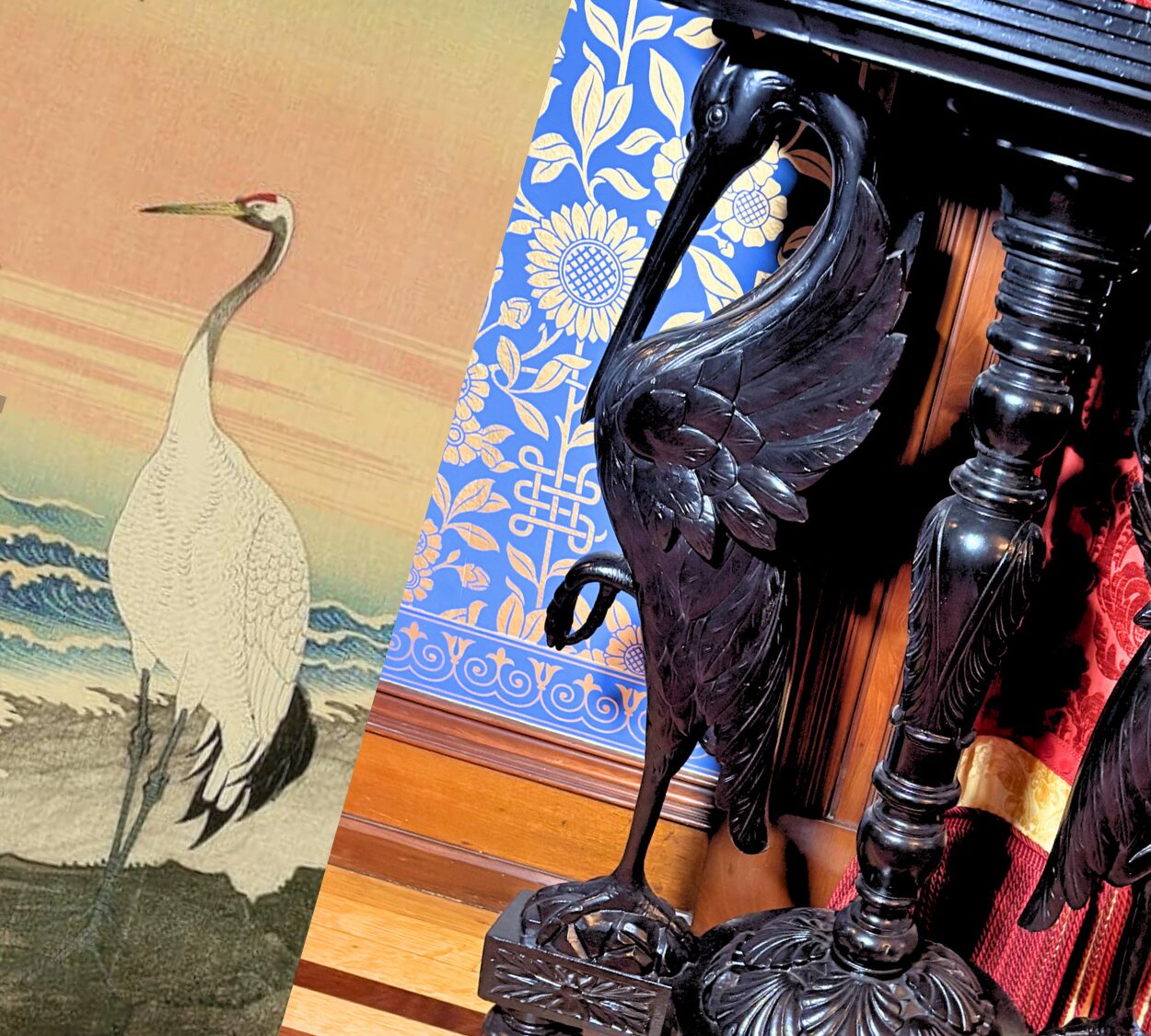
One very popular motif was the crane. The crane in Japanese art represents a sacred creature of good fortune, longevity, and fidelity.
The art period that most exemplifies the use of the crane as a decorative art motif is the Aesthetic Movement, which had its beginnings in England during the last quarter of the 19th century.
Furniture makers of this period, both here and abroad, took notice of the fine Japanese lacquered furniture created in black and deep red and adapted this look by ebonizing many furniture forms.
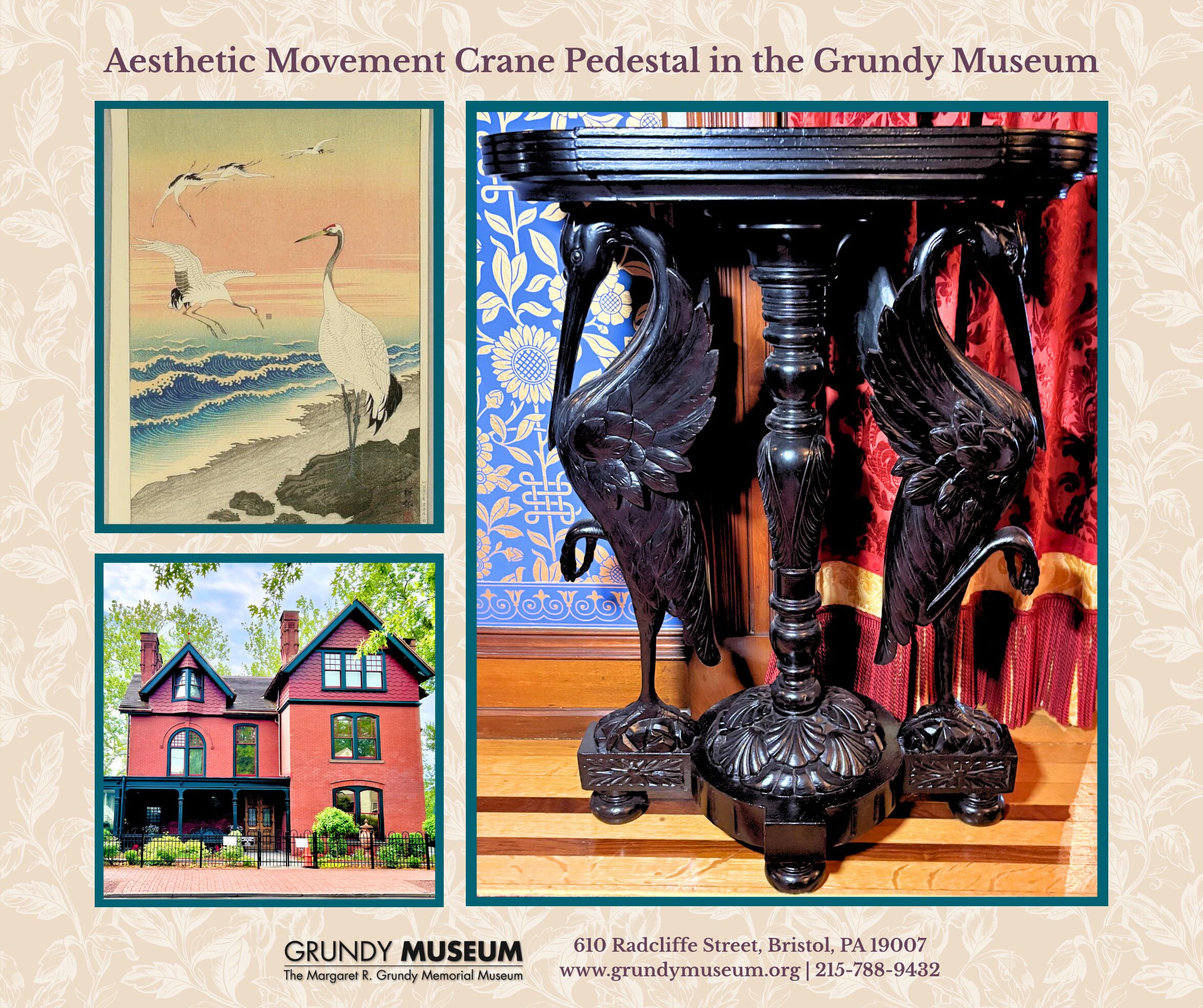
In the Drawing Room of the Grundy Museum this ebonized pedestal with the sacred cranes having their wings raised and being back-to-back is a superb example of the Anglo-Japanese style that was so popular and it complements the entire theme of the room.
You can see this beautiful piece at the Grundy Museum during your free tour from Tuesday through Sunday!